Xuanwu Hospital (First Clinical Medical College), Capital Medical University ✓ Certified partner hospital

Beijing · Partner Hospital

Xuanwu Hospital (First Clinical Medical College), Capital Medical University

The hospital is one of the joint entities of the National Medical Center for Neurological Diseases (established in 2021 by the National Health Commission with Xuanwu Hospital and Beijing Tiantan Hospital as joint entities), and also hosts the China International Neuroscience Institute and the National Clinical Research Center for Geriatric Diseases. Both neurology and neurosurgery are national key disciplines, with neurosurgery having won the second prize of the National Science and Technology Progress Award three times. The Functional Neurosurgery and Movement Disorders Treatment Center has been designated a "Clinical Center of Excellence" by an internationally authoritative organization. The Beijing Neurological Consultation Center is located within the hospital and is renowned as the "ultimate diagnostic institution" in China.

RehabilitationNeurology
Request Hospital Matching

Hospital Introduction

1. Historical Origins and Spiritual Inheritance

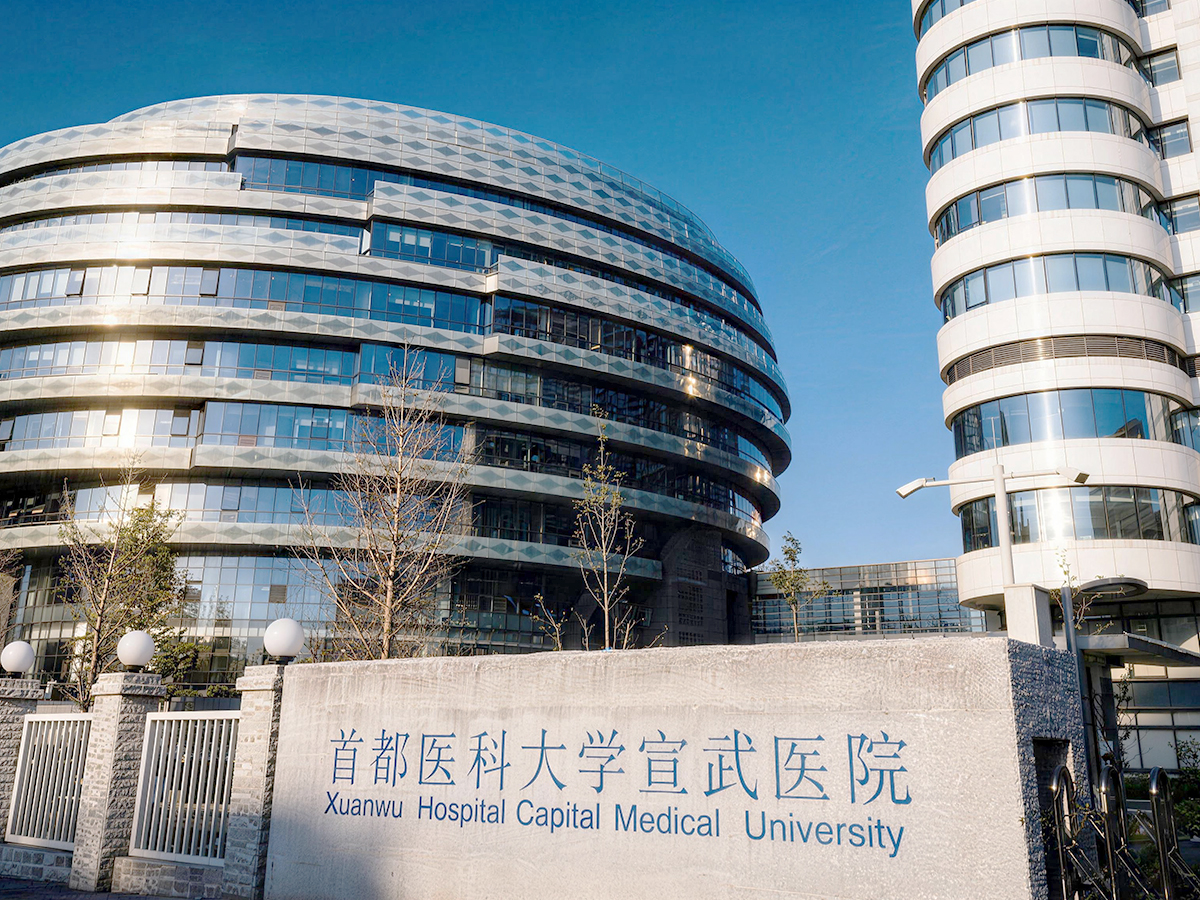
Xuanwu Hospital, Capital Medical University, was founded on September 1, 1958. Located on Changchun Street, Xicheng District, Beijing, it is a tertiary-level Class A general hospital focusing on neuroscience and geriatrics. It is one of the initial bases and cradles for talent cultivation in neuroscience in China, and also the First Clinical Medical College of Capital Medical University. The hospital upholds the spirit of "honesty, diligence, rigor, and precision" of Xuanwu, adhering to integrity and innovation, and integrating knowledge with practice. The Department of Neurology was established in 1959, and the Department of Neurosurgery was founded in 1958 by Professor Zhao Yicheng, known as the "Father of Neurosurgery in China," making it the birthplace of neurosurgery in China. The hospital houses the National Medical Center for Neurological Diseases, the China International Neuroscience Institute, and the National Clinical Research Center for Geriatric Diseases, forming a development pattern with comprehensive strength as the main body and neuroscience and geriatrics as the two wings. It has also constructed a new "one hospital, multiple campuses" structure, with the Xicheng main campus being refined and strengthened, the Fangshan campus under construction, and the Xiong'an campus already in operation.

2. Overall Scale and Hardware Capabilities

The hospital's main campus covers an area of approximately 76,000 square meters, with a total building area of nearly 100,000 square meters. Its number of beds and staff is comparable to that of a large tertiary general hospital. Relying on the China International Neuroscience Institute (CHINA-INI), established with special approval from the State Council, the hospital possesses world-class neurosurgical diagnostic and treatment equipment and a surgical center. The Department of Neurology offers more than twenty specialized outpatient clinics for conditions such as epilepsy, Parkinson's disease, dementia, cerebrovascular diseases, vertigo, and headaches. The Department of Neurosurgery has a complete range of subspecialties and is equipped with world-class neuronavigation, intraoperative MRI, and neurointerventional equipment.

3. National Ranking and Authoritative Certification

The hospital is one of the joint entities of the National Medical Center for Neurological Diseases (established in 2021 by the National Health Commission with Xuanwu Hospital and Beijing Tiantan Hospital as joint entities), and also hosts the China International Neuroscience Institute and the National Clinical Research Center for Geriatric Diseases. Both neurology and neurosurgery are national key disciplines, with neurosurgery having won the second prize of the National Science and Technology Progress Award three times. The Functional Neurosurgery and Movement Disorders Treatment Center has been designated a "Clinical Center of Excellence" by an internationally authoritative organization. The Beijing Neurological Consultation Center is located within the hospital and is renowned as the "ultimate diagnostic institution" in China.

4. Core Business Data

The Department of Neurology sees over 2,000 outpatients daily, with a high proportion of senior physicians and a huge workload in outpatient and inpatient care each year. The Department of Neurosurgery performs over 10,000 surgeries annually, with subspecialties covering all major areas such as cerebrovascular diseases, skull base tumors, functional neurosurgery, and spinal cord surgery. The number and difficulty of surgeries for complex neurological diseases are among the highest in China.

5. MDT Multidisciplinary Collaboration System

The hospital relies on a complete set of neuroscience disciplines, including neurointervention, neuropathology, neurorehabilitation, neuromedical imaging, neuropharmacology, neurobiochemistry, neuroelectrophysiology, gene and cell diagnosis, and vascular ultrasound diagnosis. It has established a multidisciplinary collaborative diagnosis and treatment mechanism for stroke, Parkinson's disease, dementia, epilepsy, brain tumors, etc., and has set up a consultation platform for difficult cases, undertaking the referral and consultation of difficult and complex neurological cases nationwide.

6. International and Foreign-Related Medical Treatment System

The hospital houses the China International Neuroscience Institute, which is specially approved by the State Council. It is an important platform for high-level international cooperation and exchanges in the field of neuroscience in China. It undertakes foreign aid training in neurosurgery and international academic cooperation, and has an international reputation and service capability to provide high-level diagnosis and treatment for patients with difficult neurological diseases at home and abroad.

Key Departments

Explore the Clinical Focus and Capabilities of This Hospital's Key Departments

Select a department to view its full profile.

Department Profile

Neurological Rehabilitation

One of the birthplaces of neurorehabilitation in China, it is a benchmark neurorehabilitation specialty department配套 with the National Center for Neurological Diseases, benchmarked against the International Society of Physical Medicine and Rehabilitation Medicine (ISPRM), and undertakes comprehensive rehabilitation treatment for severe brain injury, spinal cord injury, and complex neurological dysfunction.

Historical Origins and Spiritual Inheritance:

Founded by Professor Wang Maobin, the department integrates the Neurorehabilitation Treatment Center, Functional Therapy Department, Acupuncture Department, and Massage Department on the basis of physiotherapy. It is one of the earliest rehabilitation medicine departments in China focusing on neurofunctional rehabilitation and highlighting the rehabilitation of acute and complex critical illnesses. Professor Wang Maobin is a pioneer of neurorehabilitation medicine in my country. The department has successfully treated patients with serious nerve injuries, such as Liu Hairuo, a Hong Kong Phoenix TV anchor; Luo Jinyong, a Yunnan anti-drug hero; and Tan Jixiong, a Wuhan special police officer, generating a significant impact both domestically and internationally. Professor Song Weiqun, as the first chairman of the Critical Care Rehabilitation Professional Committee of the Chinese Association of Rehabilitation Medicine, spearheaded the compilation of the first "Guidelines for Critical Care Rehabilitation" in China, promoting the development of critical care rehabilitation medicine in the country.

Core business operational efficiency:

The department is a national key clinical specialty base, a national key professional base for resident physician training, and one of the first standardized training bases for rehabilitation medicine in Beijing. It is equipped with advanced equipment such as upper limb functional rehabilitation robots, intelligent lower limb gait training systems (walking robots), repetitive transcranial magnetic stimulation devices, transcranial direct current stimulation devices, and computer-aided cognitive and language assessment and training systems. Its clinical research and treatment in motor dysfunction, aphasia, articulation and swallowing disorders, cognitive impairment rehabilitation, and assessment and arousal of consciousness are among the leading in China. It is a master's and doctoral degree training center and postdoctoral research station of Capital Medical University. Professor Song Weiqun has trained more than 40 master's, doctoral and postdoctoral students, and edited more than 20 textbooks and monographs. Among them, "Rehabilitation Medicine (4th Edition)" won the first prize of the first National Excellent Textbook Award. He has published nearly 40 SCI papers and more than 160 core journal papers.

Discipline Positioning and Benchmarking:

This is the first specialized department in China to provide early and comprehensive clinical rehabilitation for critically ill patients in neurology and neurosurgery. Professor Song Weiqun serves as Vice President of the Chinese Association of Rehabilitation Medicine, Vice President of the Rehabilitation Physician Branch of the Chinese Medical Association, Chairman of the Committee on Rehabilitation of Consciousness Disorders of the Chinese Association of Rehabilitation Medicine, Honorary Chairman of the Committee on Critical Care Rehabilitation, and President of the Rehabilitation Medicine Specialist Branch of the Beijing Medical Association. The department's research on repetitive transcranial magnetic stimulation for visuospatial neglect was cited in the 2016 American Heart Association/American Stroke Association Guidelines for Adult Stroke Rehabilitation and the 2017 Australian Stroke Foundation Clinical Guidelines for Stroke Management. In the field of brain-computer interface-based early functional reconstruction after stroke, the department is deeply involved in the national major chronic disease project "Research on Digital and Intelligent Holistic Rehabilitation Strategies for the Entire Course of Stroke," integrating cutting-edge technologies such as brain-computer interfaces, wearable devices, vagal nerve electrical stimulation, and transcranial temporal interference stimulation to construct an integrated digital and intelligent rehabilitation system encompassing screening, assessment, rehabilitation, and monitoring.
Next Step

Is this hospital right for you?

Submit diagnosis, treatment history, and goals; hospitals and specialists recommend a formal case assessment.

Contact our service team